Super Today: A Fun and Cute Display Font for Creative Projects
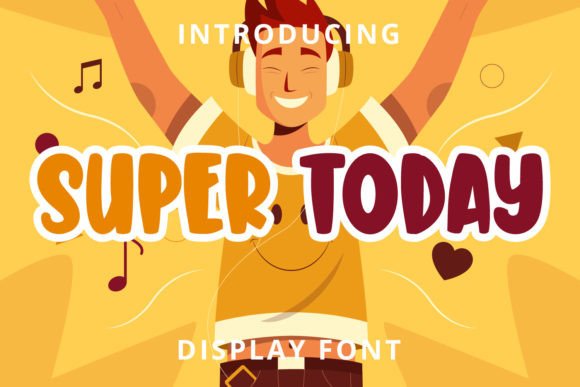
Super Today is a display font that stands out for its playful and approachable design. Its clean, rounded edges and friendly character shapes make it ideal for projects that aim to convey a sense of fun and creativity. While many fonts prioritize readability or formality, Super Today leans into a more whimsical aesthetic, making it particularly well-suited for specific applications.
What Makes Super Today Unique?
Unlike traditional serif or sans-serif fonts, Super Today has a distinct visual identity that sets it apart. Its characters are designed with subtle curves and soft transitions, giving the typeface a light and inviting feel. This makes it especially appealing for designs targeting younger audiences or projects that require a lighthearted tone.
The font’s structure allows for clear legibility at larger sizes, which is essential for headings, logos, and other prominent text elements. However, it may not be the best choice for long blocks of body text due to its stylized appearance. Instead, it shines when used as a focal point in a design rather than as a primary text medium.
When Super Today Is a Good Fit
Super Today excels in contexts where a sense of playfulness or cuteness is desired. It works well in children’s books, educational materials, branding for kid-friendly products, or marketing campaigns aimed at families. The font’s visual appeal can help create an immediate emotional connection with the audience, especially when paired with bright and vibrant color schemes.
For example, a toy company looking to create a logo that feels both modern and approachable might find Super Today to be an excellent choice. Similarly, a children’s website or app could use the font to reinforce a friendly and engaging user experience.
Comparing Super Today to Other Fonts
When considering display fonts, there are several alternatives that offer similar or different characteristics. For instance, fonts like Comic Sans or Kalam also have a casual, hand-drawn feel, but they often come with their own set of limitations. Comic Sans, while widely recognized, can sometimes appear unprofessional in certain contexts, whereas Kalam offers a more elegant and script-like style.
Super Today falls somewhere in between these extremes. It avoids the overly informal tone of some casual fonts while maintaining a level of charm that makes it suitable for creative projects. Unlike more rigid or formal display fonts, it doesn’t impose strict constraints on its usage, allowing designers to experiment with different layouts and visual effects.
Strengths and Limitations
One of Super Today’s greatest strengths is its versatility within specific design niches. It can adapt to a variety of styles, from bold and colorful to minimalist and clean, depending on how it’s used. This flexibility makes it a valuable tool for designers who want to maintain a cohesive look across multiple elements of a project.
However, its unique style may not be appropriate for all types of work. In professional or high-stakes environments, such as corporate branding or academic publications, Super Today could be seen as too informal or inconsistent with the overall tone. Additionally, because it is a display font, it may not support a wide range of languages or special characters, which could limit its usefulness in certain international or technical contexts.
Best Use Cases for Super Today
Designers who work on projects involving children, entertainment, or lifestyle branding often find Super Today to be a helpful addition to their typographic toolkit. It pairs well with illustrations, icons, and other visual elements that reinforce a playful or imaginative theme.
For instance, a children’s book publisher might use Super Today for chapter titles or character names to add a sense of personality and energy to the text. A marketing team promoting a new line of kids’ toys could incorporate the font into promotional materials to create a more engaging and relatable visual identity.
Another scenario where Super Today can be effective is in social media content. Its eye-catching design can help posts stand out in crowded feeds, especially when combined with bold colors and dynamic layouts. However, it’s important to ensure that the font remains readable on smaller screens and mobile devices.
When to Consider Alternatives
While Super Today is a strong option for certain projects, there may be situations where another font would be more appropriate. For example, if a designer needs a font that conveys professionalism or authority, they might opt for something like Roboto or Open Sans, which are known for their clarity and neutrality.
In cases where a more structured or elegant appearance is required, fonts with sharper lines and more consistent spacing—such as Lato or Raleway—could be better suited. These fonts are often preferred for websites, presentations, or documents where a polished and refined look is essential.
Additionally, if a project requires a font that supports multiple languages or complex scripts, it’s important to verify whether Super Today includes those features. Some display fonts may lack comprehensive character sets, which could lead to formatting issues or inconsistencies in multilingual content.
Choosing the Right Font for Your Needs
Selecting the right font involves understanding the goals of the project, the target audience, and the overall design vision. Super Today is an excellent choice when the goal is to evoke a sense of fun, creativity, or childlike wonder. However, it’s important to consider how the font will perform in different contexts and whether it aligns with the intended message.
Designers should also take time to test the font in various scenarios, such as print, digital, or web environments, to ensure it meets the project’s requirements. Experimentation with different color combinations, spacing, and layout options can help maximize the font’s potential while avoiding any unintended visual distractions.
Ultimately, the decision to use Super Today should be based on a thoughtful evaluation of its strengths and limitations in relation to the specific needs of the project. By considering these factors, designers can make informed choices that enhance the overall effectiveness of their work.